GastroCafer'e Hoş Geldiniz!



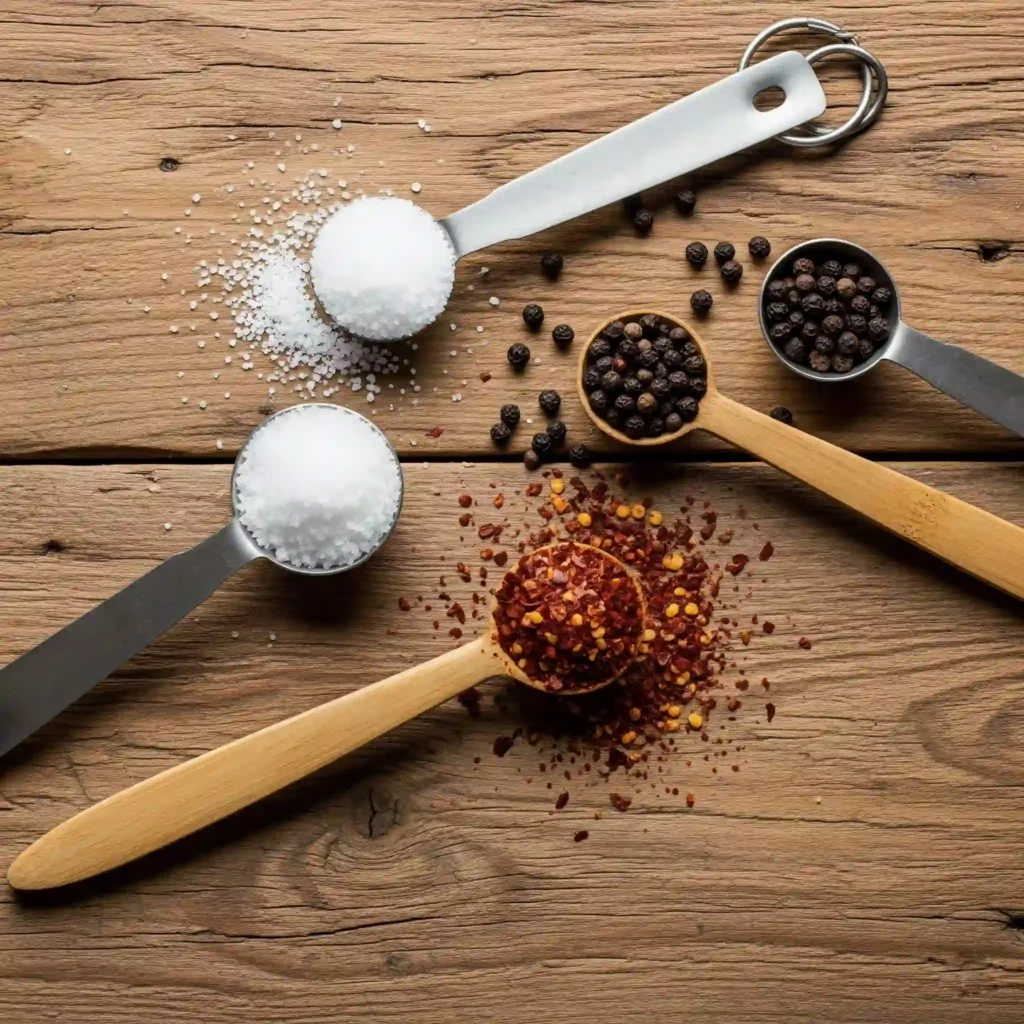
You often come across phrases like “a pinch” or “a dash” in recipes.
While they’re familiar to experienced cooks, beginners might find them confusing.
Imagine this:
You’ve chopped your potatoes, taken the meat out of the fridge, and washed the tomatoes. Everything is ready.
Then you read: “Add a pinch of salt, a dash of pepper.”
Wait, how much is that exactly? Is it a specific gram, or just a random throw?
Feels like the recipe suddenly turned into a guessing game, doesn’t it?
Let’s take a closer look at what these vague measurements actually mean and how you can master the art of seasoning without a scale.
GastroCafer wishes you enjoyable reading. 😉
1) So, What Exactly Is a Pinch? The Measurement Breakdown
In the culinary world, these terms aren’t just random slang; they actually correspond to specific fractions of a teaspoon. Understanding this hierarchy helps you adjust flavors with precision.
Here is the breakdown from smallest to largest:
A Smidgen
This is a tiny amount, roughly 1/32 teaspoon (0.15 – 0.18 grams).
It’s often used for potent spices like cayenne pepper where a little goes a long way.
A Pinch
Historically, this is the amount you can pick up between your thumb and forefinger.
In standard measurements, it equals 1/16 teaspoon (0.3 – 0.4 grams).
A Dash
Slightly larger than a pinch. For dry ingredients, it is about 1/8 teaspoon (0.6 – 0.8 grams).
If you are using liquid ingredients (like hot sauce), a dash is roughly 3 drops.
A Tad
Less common but worth knowing, a tad is generally considered 1/4 teaspoon (1.2 – 1.5 grams).
These terms are usually used when precise chemistry isn’t required, but flavor balance is key.
2) The “Finger Rule”: How to Measure Without Spoons

If you are in a rush and don’t want to dirty a measuring spoon for 1/16th of a teaspoon, you can rely on your hands. Chefs do this all the time! 🙂
- The Two-Finger Pinch: Using just your thumb and index finger typically yields a standard “pinch” (0.3 – 0.4 grams).
- The Three-Finger Pinch: Using your thumb, index, and middle finger grabs a larger amount (0.6 – 0.8 grams). This is often what chefs mean when they say “season generously“. Note: This amount is roughly equivalent to a “dash“.
A Crucial Note on Salt Types
Not all salts weigh the same. A pinch of table salt is much saltier and denser than a pinch of kosher salt because the grains are smaller.
If a recipe calls for Kosher salt and you are using table salt, use a smaller pinch to avoid over-salting your dish.
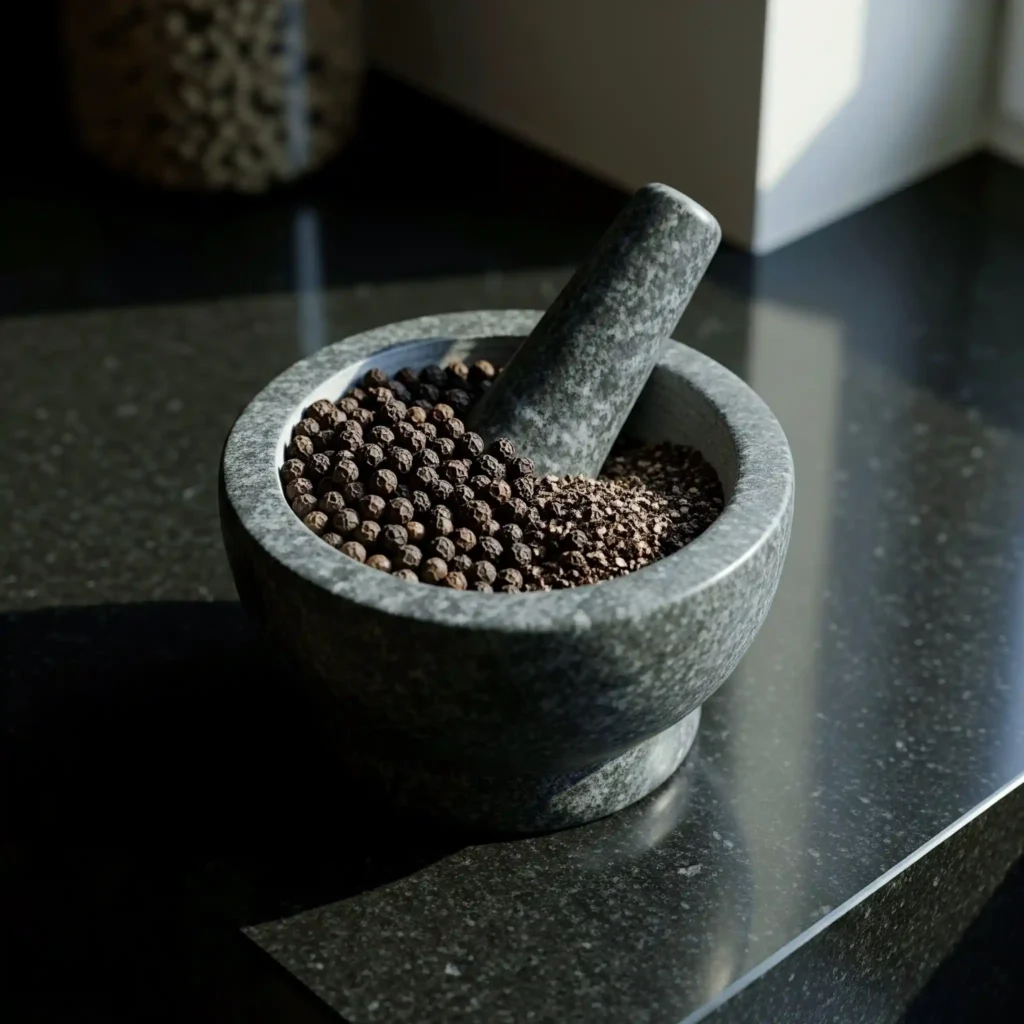
A Quick Tip for Black Peppercorns
Buy black pepper whole and grind it just before using.
This helps preserve its natural oils and delivers a much stronger aroma and flavor compared to pre-ground pepper.
Since fresh pepper is more potent, start with a “smidgen” and work your way up.
3) How to Deal With Unclear Recipe Terms?
Words like a pinch, a dash, or “season to taste” become clearer with practice.
If you’re just starting out, feel free to use measuring spoons to get used to quantities. Measuring these small amounts a few times will train your eye.
Over time, your sense of taste will guide you better than any tool.
The Golden Rule: You Can Add, But You Can’t Subtract
Feel free to experiment, but don’t overdo it. Always start with a smaller pinch.
You can always add more salt or spice, but it is nearly impossible to fix a dish that has been over-seasoned.
Remember, cooking isn’t only about exact amounts. It’s also about instinct and creativity.
And don’t forget to enjoy the process:
With a pinch of courage and a dash of curiosity, you’ll feel more confident and free in the kitchen. 😉
Continue your gastronomy journey without slowing down with “How Long to Boil an Egg?“ and “What Are Legumes?“
Cafer Can Yeşilyurt
Helpful Resources