GastroCafer'e Hoş Geldiniz!



You have likely noticed those brown, slightly burnt-looking bits stuck to the bottom of your pan after searing meat or sautéing vegetables.
Most home cooks interpret this sight merely as a dirty pan or worse, assume they have burnt the food.
Consequently, their first instinct is to take the pan to the sink and scrub it away.
However, in a professional kitchen the attitude towards these residues is entirely different.
For a chef, those sticky bits are not a problem to be cleaned; they are the greatest flavor treasure in the kitchen.
Why?
Because those particles capture the most intense, concentrated essence of whatever you just cooked.
When you apply the correct technique, that intense aroma transforms from pan waste into a flawless sauce that crowns your main dish.
The name of this technique is “deglazing”.
But be careful! To deglaze a pan implies much more than simply “pouring liquid and scraping.”
This technique requires mastering heat management, selecting the right liquid, and understanding the chemistry behind the flavor.
As GastroCafer, I am here to answer the question “How do you deglaze properly?”. 😉
If you are ready, let’s embark on this journey and unlock the treasure hidden at the bottom of your pan!
The Foundation: The Maillard Reaction
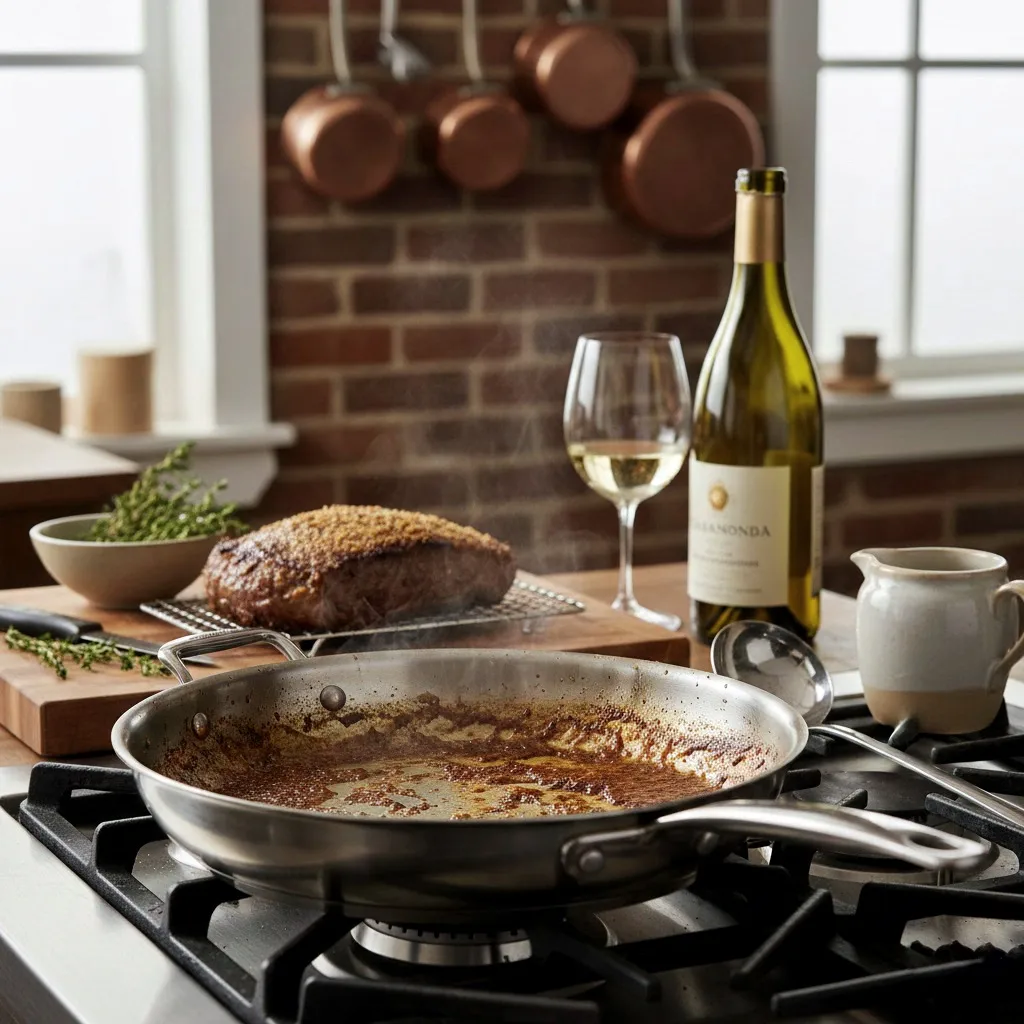
First, you should understand that the brown layer at the bottom of the pan is not a coincidence; it is formed by a scientific foundation known as The Maillard reaction.
In essence, this reaction occurs when proteins and sugars interact under high heat.
As a result, appetizing browning occurs on ingredients like meat, onions, or even dough.
While some of this brown layer remains on the food itself, the most intense and concentrated part sticks to the pan.
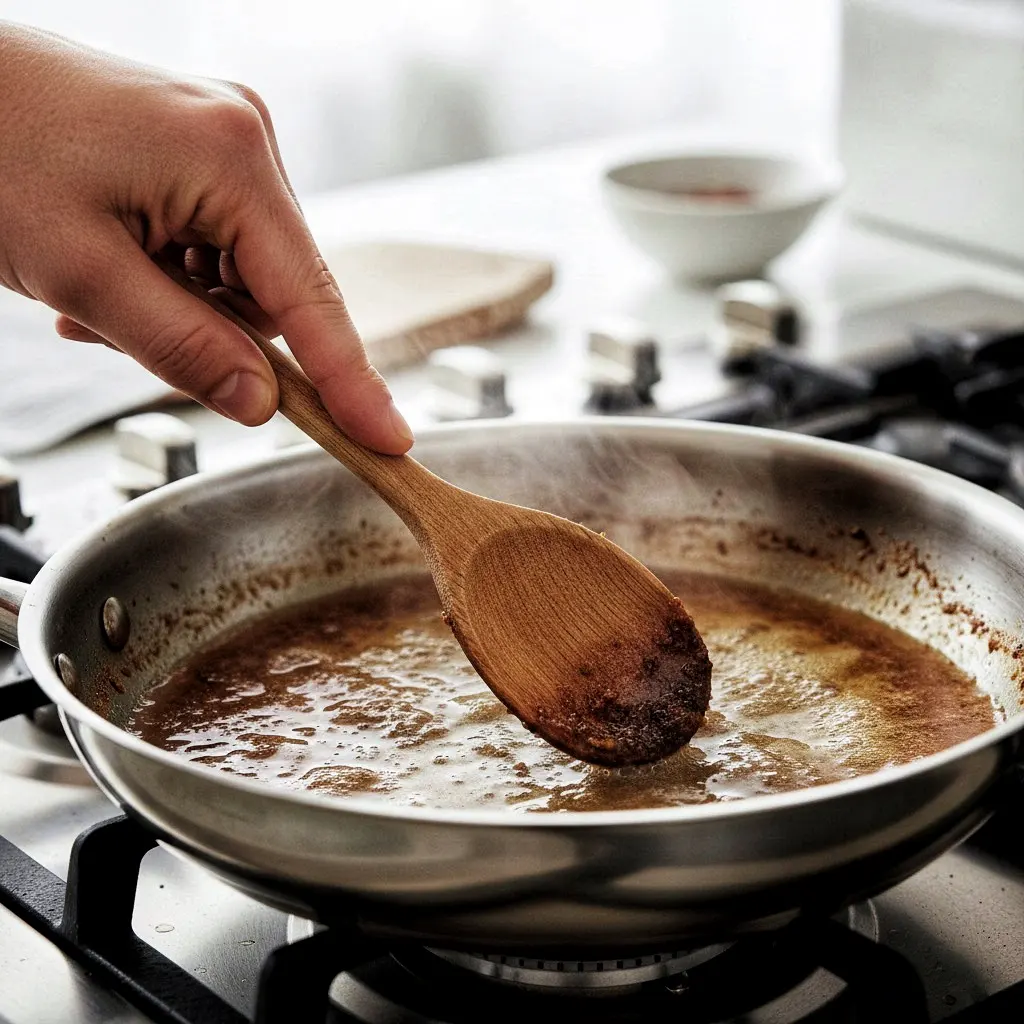
In culinary terminology, we call this residue “fond”. This is the treasure we are talking about.
However, you cannot use fond in its initial state.
It is stuck hard to the pan, tough, and can even taste slightly bitter if eaten alone.
To unlock its potential, you must rescue it from where it is trapped and you must dissolve it.
This is where you deglaze the pan, utilizing three basic principles:
- Thermal Shock: Pouring a cooler liquid into the hot pan creates an immediate temperature change, which triggers the particles to lift from the surface.
- Solvent Power (Acidity): The quality of the liquid is crucial. Acidic liquids like wine, vinegar, or tomato juice dissolve caramelized sugars and proteins much faster than plain water.
- Mechanical Action: Scraping with a spatula ensures that the residue fully dissolves and blends into the sauce.
Thanks to these three steps, that layer you once thought was dirt becomes the foundation of a new, complex sauce.
In short, to deglaze is not just a cleaning process; it is the art of creating flavor through chemistry.
How to Deglaze and Which Liquids to Use?
Now that we understand the science, let’s step into the kitchen.
Timing is the most critical factor here.
You should deglaze the pan immediately after removing the seared meat or sautéed vegetables.
The liquid must be added while the pan is still on the heat and hasn’t lost its temperature.
Technically, you could use water at this stage.
However, as valued followers of GastroCafer, I know you wouldn’t want to waste such a flavor opportunity.
Using water instead of stock in your mise en place is often seen as a missed chance because it dilutes the flavor.
The Best Liquid Alternatives for Deglazing
The liquids you choose to dissolve that delicious fond will give your dish a unique identity:
- Beef or Chicken Stock: This is a classic choice that strengthens the meaty aroma of the dish, giving the sauce body and depth.
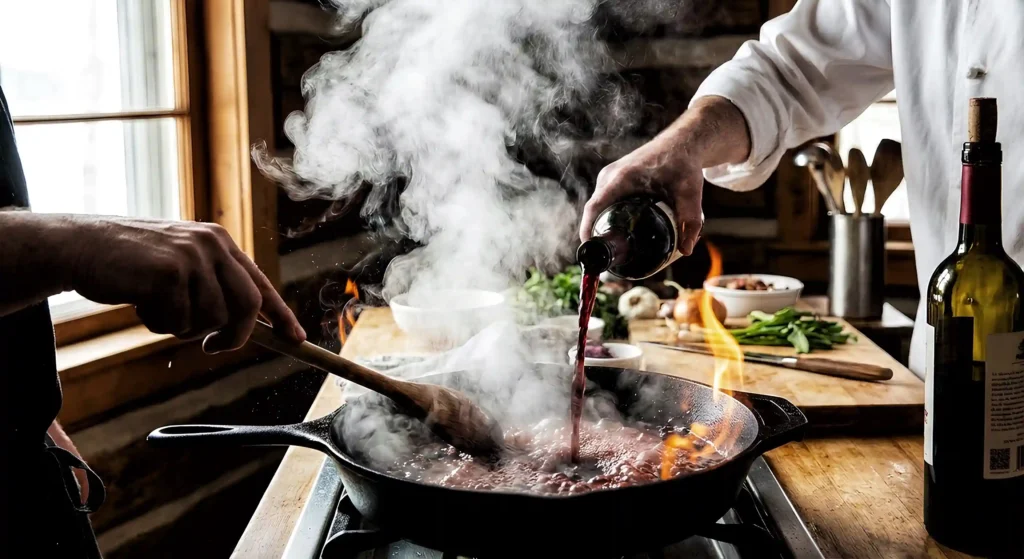
- Wine (Red or White): The most popular liquid to deglaze with. As the alcohol evaporates, it leaves behind a fruity, rich aroma. White wine adds acidity and freshness, while red wine provides a darker and deeper flavor profile.
- Vinegar (Balsamic, Cider, or Wine): Its sharp acidity balances fatty dishes perfectly and gives the sauce a beautiful, glossy finish.
- Citrus Juices: Lemon or orange juice creates a refreshing effect, making it ideal for chicken and seafood dishes.
- Beer or Hard Cider: Perfect for adding rustic, caramelized, and malty notes to your sauce.
- Cream: If you want a rich, velvety sauce, cream is the answer. It is usually added after the fond has been initially dissolved with wine or stock, providing a silky texture.
- Soy Sauce: Preferred in Asian-inspired dishes. When combined with the pan residue, it creates an “umami” explosion and gives the sauce a deep color. Thanks to soybeans! 🙂
- Pasta Water: If you want a sauce that clings better to the food, adding a bit of starchy water to the liquid helps the sauce emulsify and thicken quickly.
Scraping and the Birth of the Pan Sauce
Once you have selected your liquid, the process moves quickly.
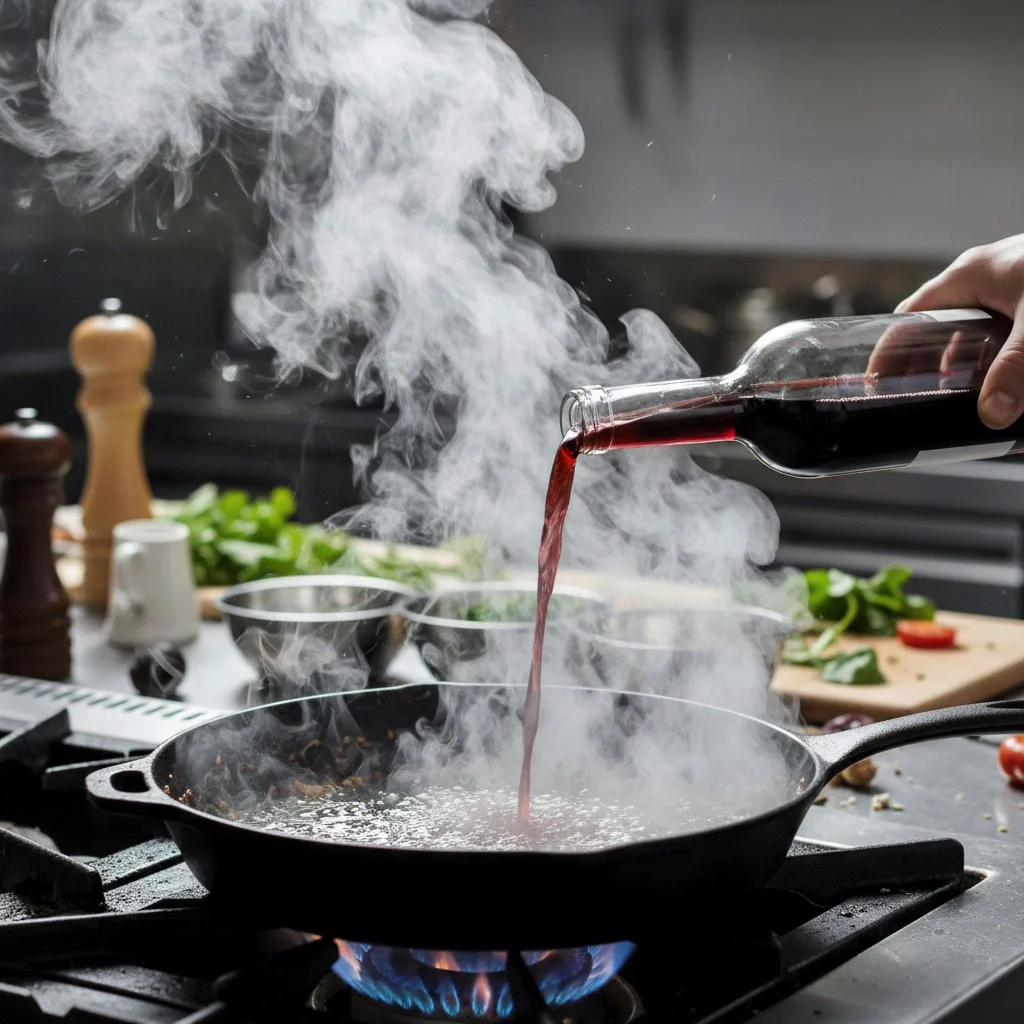
First, you will observe a violent sizzling sound and a burst of steam as the liquid hits the hot pan.
At this exact moment, you must use a flat-edged wooden spoon to quickly and carefully scrape up that brown layer from the bottom.
Once the fond formed by the Maillard reaction has completely dissolved in your chosen liquid, let it simmer for a short while.
As the liquid evaporates (reduces), your sauce will intensify, become glossy, and turn into a delicious “pan sauce.”
With a correctly applied deglaze technique, you achieve the following results:
- Your meal now rivals a professional restaurant dish, just like in the movies.
- You have created the aromatic skeleton of a complex new sauce.
- Valuable flavors are returned to the main dish without waste.
- The caramelized aromas formed during cooking are concentrated.
Conclusion
In summary, deglazing is the guaranteed way to achieve maximum flavor with minimum effort.
You now know that you should look at those sediments at the bottom of the pan not as dirt, but as an “undiscovered flavor mine.”
So, tonight, instead of taking your pan straight to the sink, give this technique a try.
Deglaze it, recover that aroma, and create your own signature sauce.
GastroCafer wishes you a table full of flavor!
Continue your gastronomy journey without slowing down with our articles on “How Much is a Pinch?” and “How to Boil Potatoes?“
Cafer Can Yeşilyurt
Helpful Resources