GastroCafer'e Hoş Geldiniz!



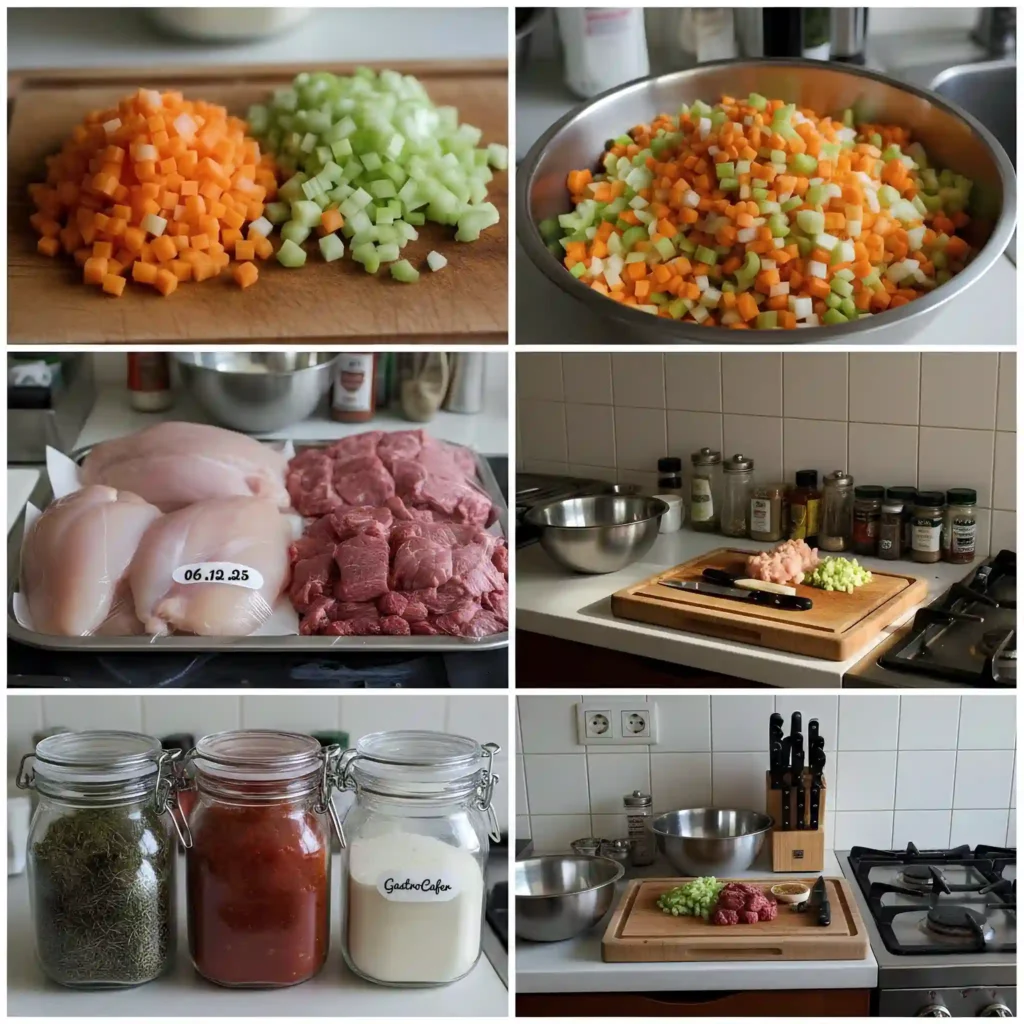
If you have ever dined at a top-tier restaurant, you’ve likely observed the incredible speed and flawless coordination during service.
This coordination is the product of deep discipline, ensuring that:
- The chef can focus solely on the finishing touches,
- Ingredients across all stations are kept to precise measurements and standards,
- The risk of cross-contamination is minimized,
- Panic is avoided, even during unexpected rushes,
- And every plate maintains the exact same flavor profile.
At the foundation of this success – before the stoves are even lit – lies the “Mise en Place” system.
While the French phrase translates literally to “putting in place” or “everything in its place“; in the culinary world, it represents much more than simple preparation.
It is a philosophy of existence.
It is also a workflow system that directly reflects kitchen time management, team coordination, and the professionalism of the chef.
Although the application of mise en place may seem simple, true mastery requires a chef’s expertise.
This is exactly where GastroCafer steps in. With this “Mise en Place Guide“, we will uncover the intricacies of this system for you.
Enjoy the read! 🙂
What Are the Stages of Mise en Place?
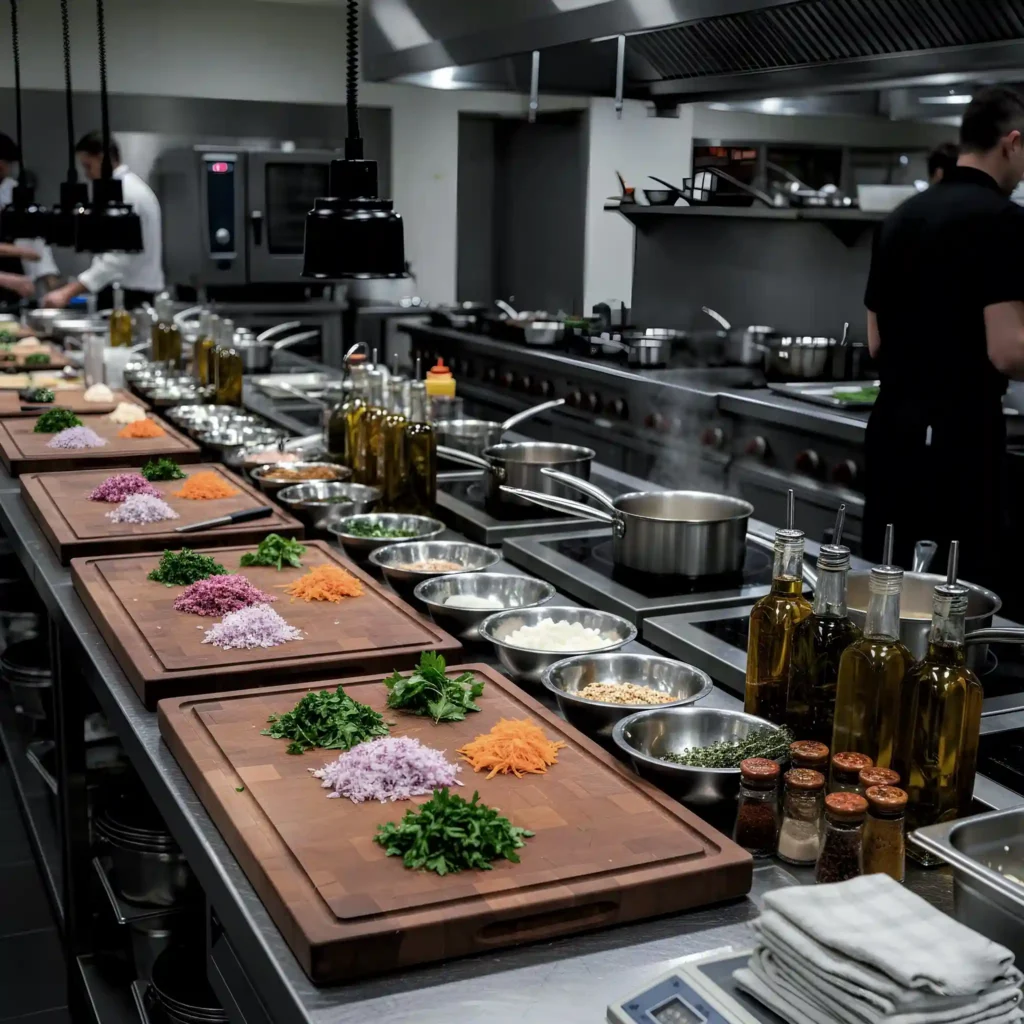
Mise en place is a preparation process planned within a logical framework, extending from the very beginning of a recipe to its final form on the plate.
This stage isn’t just about chopping ingredients; it involves organizing every potential step.
Consequently, mise en place in professional kitchens consists of six fundamental components.
Each component aims to reduce stress and error rates to zero during service:
1. Food and Ingredient Preparation
In this phase, ingredients are washed, sorted, and peeled.
They are chopped using techniques such as brunoise and julienne.
Furthermore, portioning food into correct amounts and vacuum-sealing them for freshness falls under this scope.
2. Building Base Flavors and Sauces
Components that would be time-consuming during a busy service are prepared in advance.
This includes mirepoix, aromatic oils, spice blends, basic stocks, and the preparation of the 5 Mother Sauces (like Hollandaise) or pan sauces.
3. Equipment and Station Organization
All cooking tools and auxiliary equipment needed throughout the service are identified.
Knives, cutting boards, pots, pans, and ladles are cleaned and placed in a easily accessible position.
4. Detailed Workflow and Timing
This is the most complex part of mise en place, where the Head Chef displays their strategic prowess.
It involves planning which ingredient needs to be cooked/prepared first, when specific stations will engage, and the timing of all steps.
In this way, mise en place ensures the service flows like a well-designed flowchart.
5. Hygiene, Food Safety (HACCP), and Storage
A correct mise en place is also a safety protocol.
It is mandatory to keep surfaces clean and strictly separate raw and cooked foods to prevent cross-contamination.
Additionally, controlling potential allergens and storing labeled ingredients at appropriate temperatures is crucial.
6. Final Setup for Service
All prepared ingredients are separated into containers (hotel pans) according to the cooking sequence.
They are then kept at the correct temperatures and strategically placed right behind the service line.
What Are the Benefits of Mise en Place?
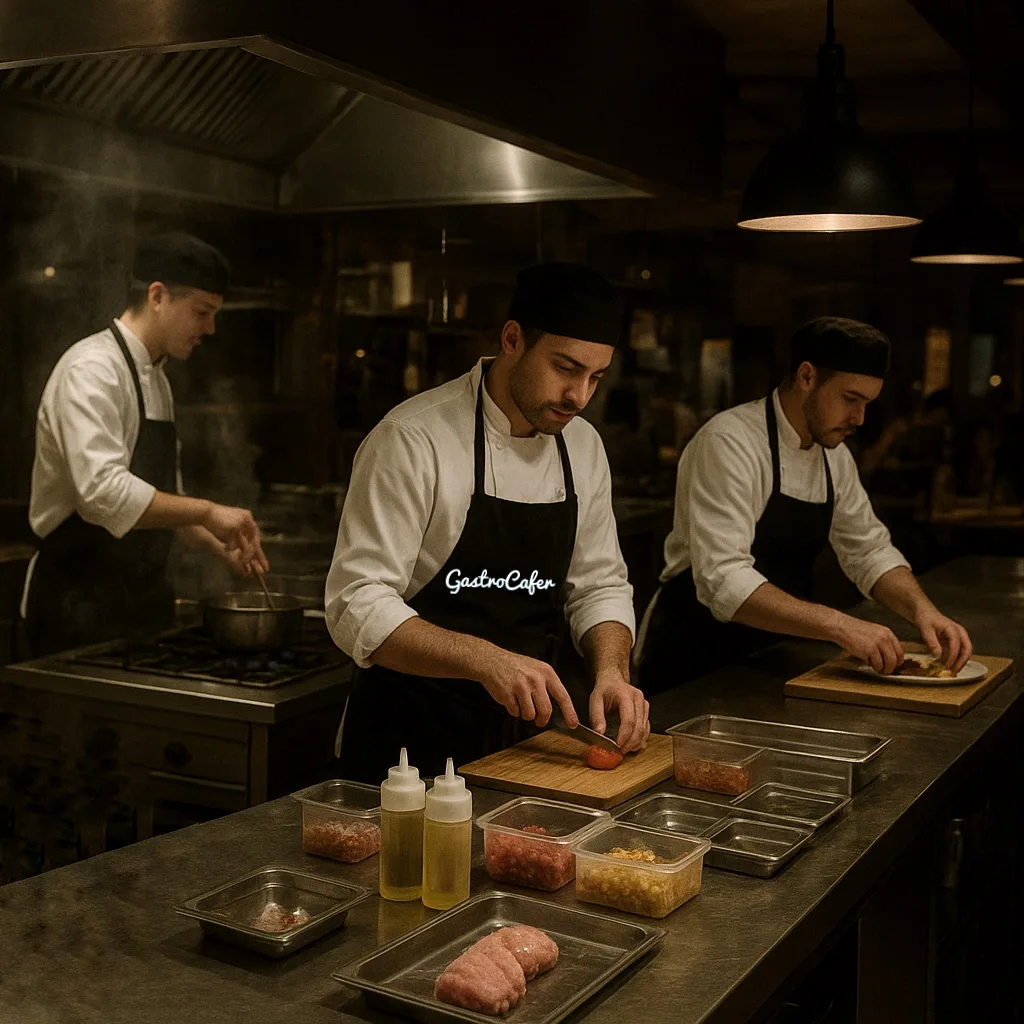
Mise en place is not just a tradition in professional kitchens; it is an existential necessity.
The system has cemented its place by adding critical value to gastronomy:
A) Perfect Time Management
During service, there are moments when you cannot afford to lose even a single minute.
Thanks to mise en place, time-stealing actions – like sorting salad greens or hunting for missing equipment – are eliminated.
This allows chefs to focus their energy entirely on cooking and presentation.
B) Flavor Guarantee and Consistency
A restaurant’s success depends on the consistency of the flavors it offers.
A measured and controlled system is established during the prep phase.
This guarantees that a dish has the same flavor profile whether it is prepared for the 1st time or the 50th time that night.
This criterion is the key to brand quality.
C) Elevating Hygiene and Safety Standards
An organized workspace prevents errors caused by chaos.
A mise en place system that minimizes cross-contamination, adheres to labeling rules, and keeps stations constantly clean guarantees the highest food safety standards.
Bonus: Using Mise en Place at Home
The impact of mise en place is striking even in home kitchens.
Complex recipes are broken down into parts, necessary ingredients are readied on the counter, and the cooking phase transforms from a chaotic experience into an enjoyable activity.
This approach significantly boosts the cooking confidence of anyone stepping into the kitchen.
Final Words

Mise en Place might seem like a silent, invisible concept to those outside the kitchen.
However, this discipline forms the foundation of the triangle of professionalism, efficiency, and quality.
You might be the Executive Chef of a Michelin-starred restaurant, or simply someone preparing a delightful dinner at home.
In either case, the mise en place details you’ve discovered with GastroCafer will fundamentally change your cooking experience.
Remember, the path to a perfect plate is closer than you think!
Don’t stop here, continue your culinary journey with “Flour Types” and “What is Deglazing?”! 😉
Cafer Can Yeşilyurt
Helpful Resources