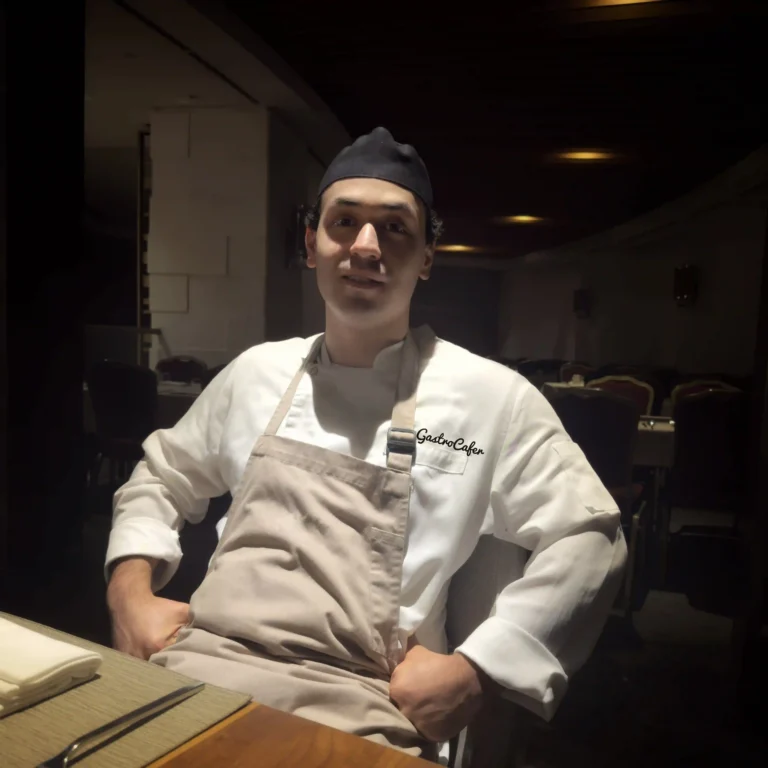



I received my invitation to the 5th Global GastroEconomy Summit (2025) just a week ago.
Being invited to this valuable organization as a press member was incredibly meaningful to me.
Through this, I also learned that my website has slowly started making a name for itself in the gastronomy industry.
And as the calendar showed October 8, 2025, I was at the Atatürk Cultural Center.
Of course, I must mention that although I hit the road at 08:00 AM, I fell victim to public transportation and arrived at 10:30 AM.
My new dark gastronomy story about Istanbul traffic…
Jokes aside, I was present at this event hosted by the TURYID (Turkish Restaurant Investors and Gastronomy Businesses Association).
I picked up my badge from the press desk and took my seat to listen to the speeches.
In my new article, I will share four valuable presentations I selected for you.
Enjoy the read!
Olive Oil Diaries: Ivano Mocetti
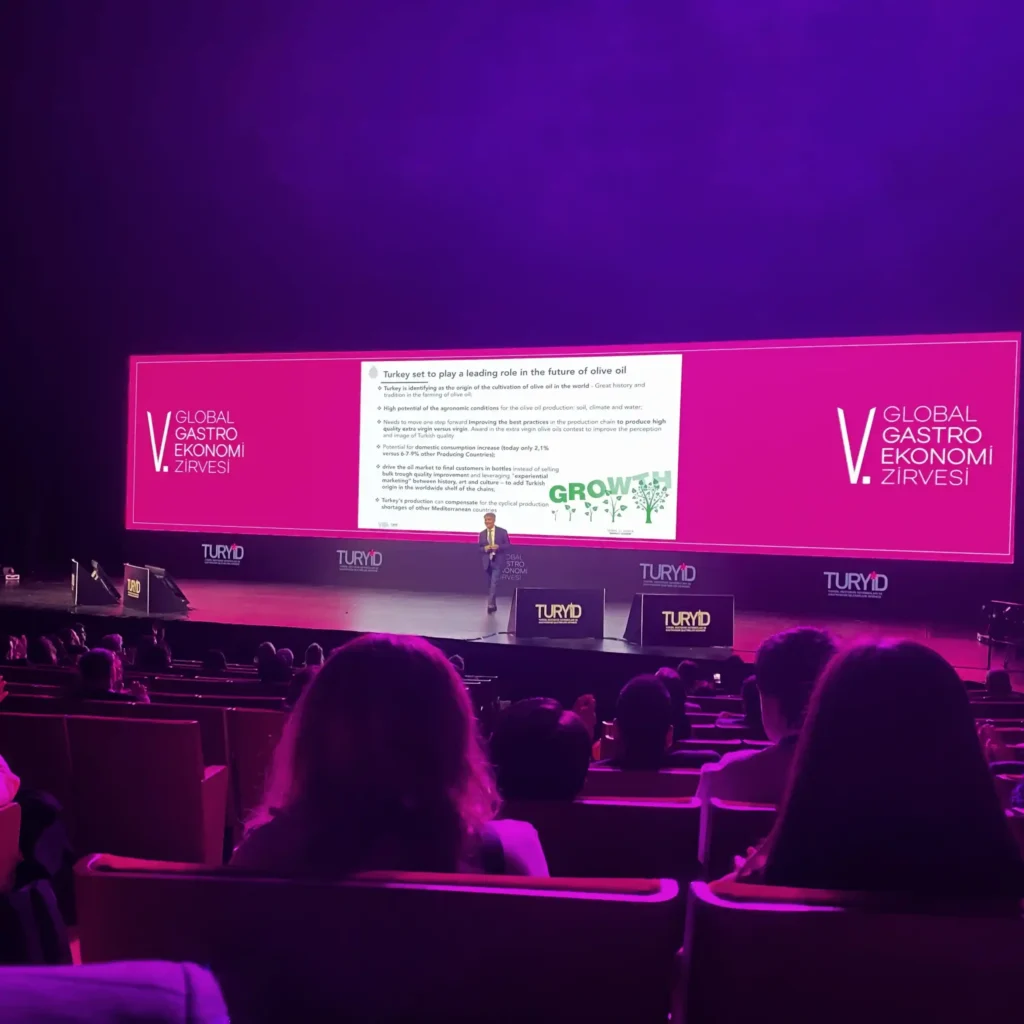
The presentation by Ivano Mocetti, approached olive oil not just as a food product.
Actually olive oil was a component of culture, ecosystem, and economy.
Reading between the lines, the profound answers to the question “Why is olive oil important?” and the speaker’s vision truly impressed me.
Why is Olive Oil Important?
According to Mocetti, olive oil is more than a historical heritage:
It is a value intertwined with agricultural technologies, tourism, and sustainability.
Some of the key points he emphasized in his speech were:
- Olive Tourism: Experiencing olive oil production on-site and comparing traditional methods with modern techniques. Right at this intersection, the emerging olive tourism adds value to rural areas.
- Modern Production Techniques and Agriculture 4.0: Innovations like IoT sensors, drones, and autonomous irrigation systems have entered olive farming in the last 5–10 years. With these technologies, yield is increased while water consumption is reduced.
- Sustainable Agriculture: Minimizing chemical inputs while protecting soil health is vital. These are no longer just “goodwill” practices; they have become an industry necessity.
- Synergy Among Countries: All olive-growing regions (especially Mediterranean countries) can share knowledge through collaborations and develop joint market strategies.
Why is Turkey Important for Olive Cultivation?
Ivano Mocetti emphasized that Turkey has roots deep enough to deserve the title of the “birthplace” of olive oil.
Here are some thoughts on this:
- Historical and Traditional Depth: Turkey has a millennia-old olive culture. Throughout history, the olive tree has been incredibly important for our country in terms of both nutrition and symbolism.
- Cultivation Conditions: With its climate diversity (Aegean, Mediterranean, and Marmara Regions) and soil structure, Turkey becomes an advantageous country for olive production.
The Italian Job – Danilo Zanna
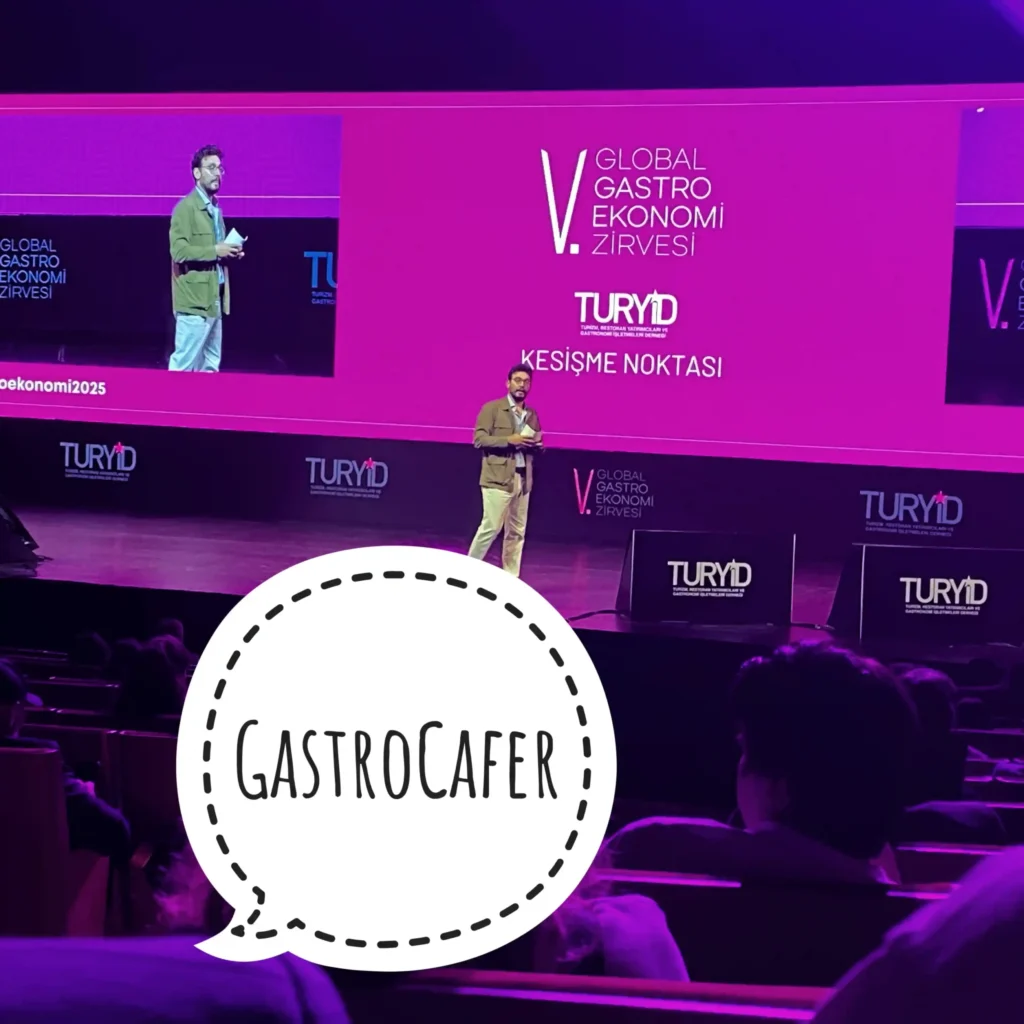
Listening to Chef Danilo Zanna’s story from the front rows was highly inspiring for a gastronomy student like me.
The Italian chef’s 13-year experience in Turkey served as a powerful guide explaining the bond between identity and roots.
Danilo Zanna started his speech by talking about the tiny kitchen of his first restaurant in Turkey.
He explained that he even considered closing it just a week after opening due to his limited Turkish.
So much so that the customer reviews coming in were negative regarding fundamental menu items like Neapolitan pizza and risotto.
This is exactly why Danilo Zanna looks back today and says, “We should have done market research beforehand.”
However, despite all the difficulties, the Italian chef’s stance was clear:
“Nobody gave me the task of ‘bringing Italian cuisine to Turkey’. I chose this path.”
Danilo Zanna’s Adaptation to Turkey
After handing over his first restaurant, Chef Zanna made it a priority to conduct field trips and learn about Turkish culture.
Thus, he also learned the dynamics of the industry for his second restaurant, Filo D’Olio.
Finally, at his closing remarks at the 5th GastroEconomy Summit, Zanna touched upon a striking point:
- The sad reality that Turkish döner is still known worldwide as “German döner”.
Faced with this sadness, the Italian chef’s following words were truly memorable:
“A chef’s duty is not only to serve food, but also to bring pieces of their culture into the kitchen.”
Additional Information About Danilo Zanna
- Danilo Zanna was born in Prato, Italy.
- He has Filo D’olio restaurants in three provinces in Turkey (Istanbul, Izmir, Bursa).
- Zanna’s Filo D’olio (Sarıyer) restaurant made it among the top 50 restaurants in Europe under “50 Top Pizza Europe 2025”.
- Filo D’Olio holds the “Marchio Ospitalità Italiana” certificate awarded by the Italian Chamber of Commerce and Industry Association (meaning every detail from the menu to wine pairings, meets Italian culinary standards).
Green Socio-Economy: İsmail Ertürk
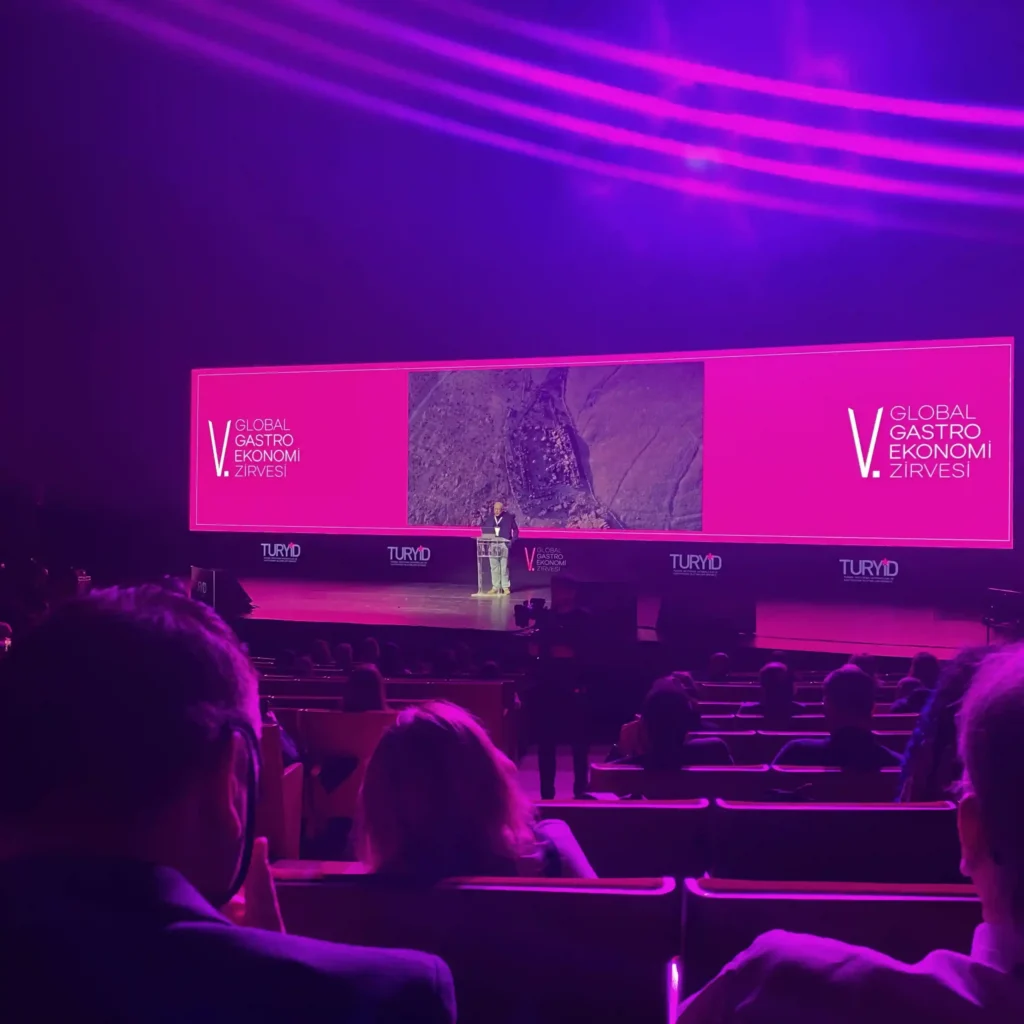
The speech by Prof. İsmail Ertürk (University of Manchester) was one of the most critical moments of the summit.
Starting his words by saying, “An economy that is not green can no longer be realistic”, Ertürk presented an eye-opening framework..
He emphasized that gastronomy is not just a product of economic growth, but a process of harmony with nature.
Therefore, Ertürk stated that younger generations should embrace gastronomy not as a trend-bound field.
Global Examples of Green Socio-Economy from Prof. İsmail Ertürk
- China’s Canton region is reshaping its agricultural investments due to climate change.
- In Europe, the Mediterranean diet is being redefined around the axis of environmental sustainability.
- Lastly, based on his interviews with chefs of Green Michelin Starred restaurants, Ertürk noted that the kitchens of the future will also produce environmental awareness.
In the final part of the presentation, a striking point was made:
The fact that the USA does not have sufficient water resources for chip manufacturing shows that the “green economy” has now become an inevitable direction of global policies.
Within this framework, Ertürk positioned gastronomy right at the heart of a green socio-economic system.
The Power of Geographical Indications – Akan Abdula
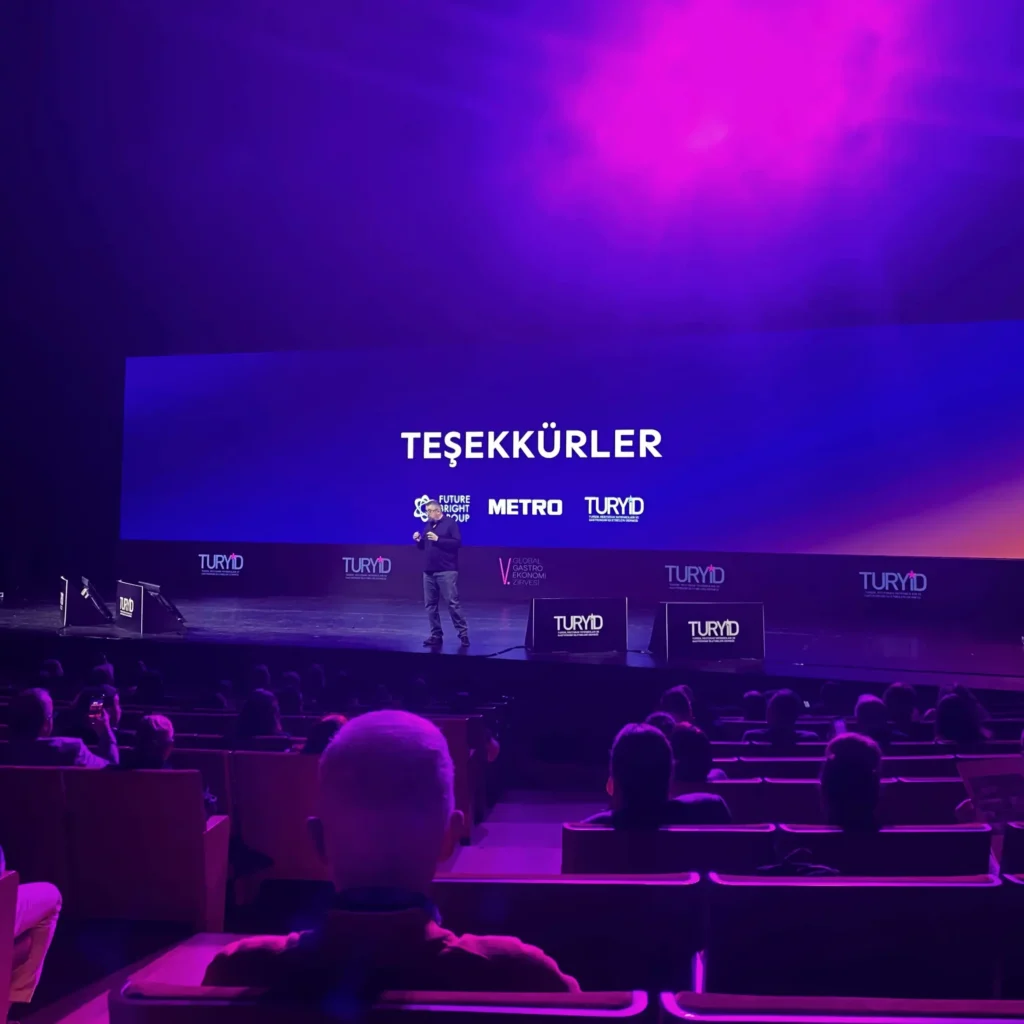
Akan Abdula’s speech made me realize that people turn to “trust” rather than “price”.
The research conducted by Metro Turkey also confirms this:
“The consumer is no longer just buying a product; they are buying origin, story, and belonging.”
At this point, the innate sense of trust possessed by geographically indicated products is being rediscovered.
Geographical indications bring value to the producer, unity to the region, and heritage to the consumer.
Why Are Geographically Indicated Products Important?
When a product receives a geographical indication, competition decreases, and collaboration begins.
Producers sit at the same table and form cooperatives.
Because a geographical indication establishes a system that has stakeholders, not a single winner.
Of course, this story has its challenges too.
Economic conditions limit the local producer;
- A lack of knowledge
- Inadequate legislation
- Being tied to local politics…
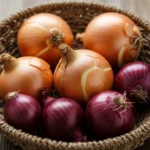
Akan Abdula made his closing with the story of the Kapıdağ onion.
This onion was distributed for free in Bandırma once upon a time and still no one wanted to buy.
But now it is an indispensable product for the kebab masters in the region today.
However, when you say “Kapıdağ onion” to a kebab master in Istanbul, you have to tell the story from scratch.
Perhaps the real test of a geographical indication is reaching consciousness rather than reaching from the field to the plate.
Final Words
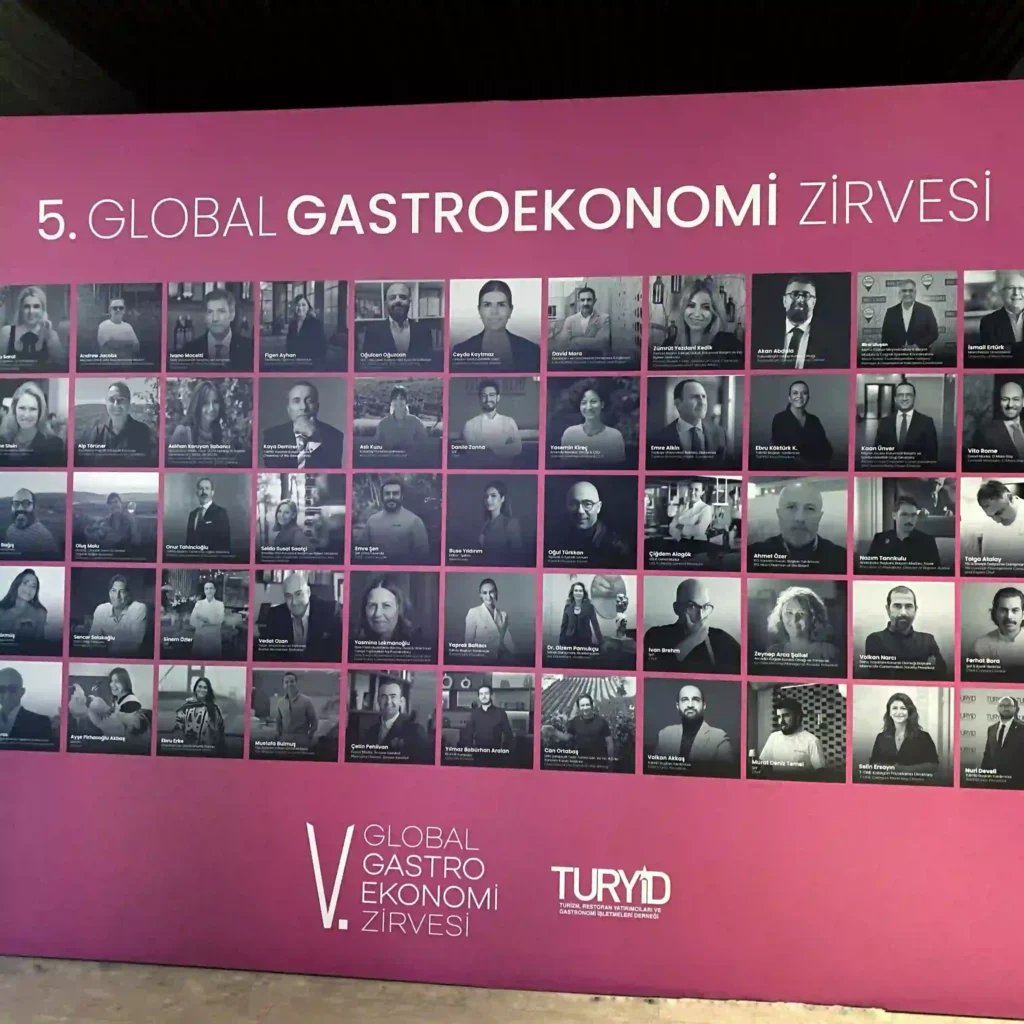
The 5th Global GastroEconomy Summit (2025) was not just a sectoral observation opportunity for me.
It also became a chance to rethink the food industry through the GastroCafer perspective.
This rich organization reminded me once again of a truth I always say:
Gastronomy is not just about cooking; it is a whole built with culture, history, nature, and economy.
From Ivano Mocetti’s olive oil presentation to Danilo Zanna’s Italian cuisine narrative, every speech revealed the different dimensions of gastronomy.
As a food writer and a student, my perspective does not stop at just observing:
It also includes creating awareness in the industry by sharing what I learn with my readers.
GastroCafer will continue to go beyond taste and convey cultural depth to you with this vision.
Stay safe and inspired!
Cafer Can Yeşilyurt
Helpful Resources
- International Olive Council (IOC)
- Preserving Traditional Cuisine
- Danilo Zanna
- Filo D’olio
- Prof. İsmail Ertürk
- Kapıdağ Onion
- Global GastroEkonomi Zirvesi
- MICHELIN Guide