

Focaccia is one of the most beloved breads in Italian cuisine.
With its lightly crispy exterior and soft interior, this versatile bread works beautifully for appetizers, sandwiches, and more.
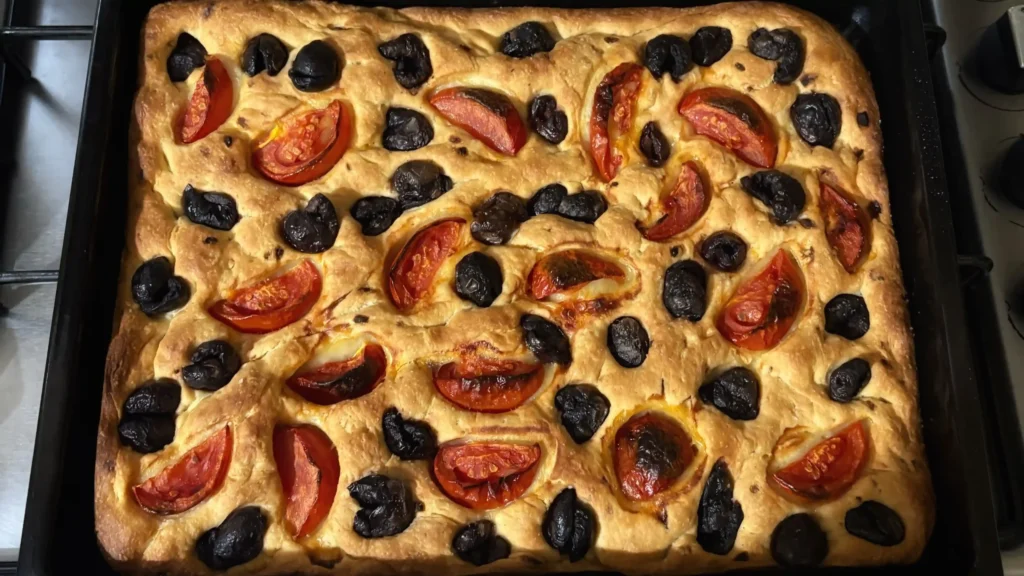
Over the last few years, homemade focaccia with cherry tomato has become increasingly popular among home bakers.
However, crafting a truly authentic focaccia bread is about much more than simply mixing dough.
Proper fermentation and a well-hydrated dough are what give focaccia its signature texture and flavor.
In this GastroCafer recipe, we’ll walk through the techniques that help create a flavorful focaccia with a beautifully golden crust.
Before we begin, let’s take a look at a few useful facts about this famous Italian bread!
What Is Focaccia Bread?
Focaccia is a traditional Italian flatbread known for its olive oil-rich dough and airy texture.
Although it is often compared to pizza; focaccia is typically thicker, softer, and more bread-like.
Additionally, a classic focaccia is recognized by the characteristic dimples on its surface.
These deep indentations aren’t just for visual appeal; they allow the olive oil to ensure maximum flavor.
Focaccia vs. Pizza Dough: What’s the Difference?
This is one of the most frequently asked questions when exploring culinary fundamentals:
Are focaccia bread and pizza dough the same thing?
The short answer is: No.
Although both are prepared with similar base ingredients, focaccia dough generally features:
- A higher water content (higher hydration).
- A longer fermentation and proofing time.
- A significantly larger amount of olive oil.
- A thicker, softer, and more pillowy texture.
Because of these distinct differences, focaccia offers a highly aromatic bread-like experience.
On the other hand, traditional pizzas offer thin and crispy base.
The Best Focaccia Toppings
One of the reasons focaccia is so popular is its flexibility.
In classic Italian focaccia recipes, the most popular ingredients include:
- Black olives
- Cherry tomatoes
- Fresh rosemary
- Sea salt
- Red onion
However, focaccia can easily be customized with different herbs, vegetables, and cheeses.
Alright, now that we have the basics down, let’s move on to our fantastic homemade focaccia recipe!
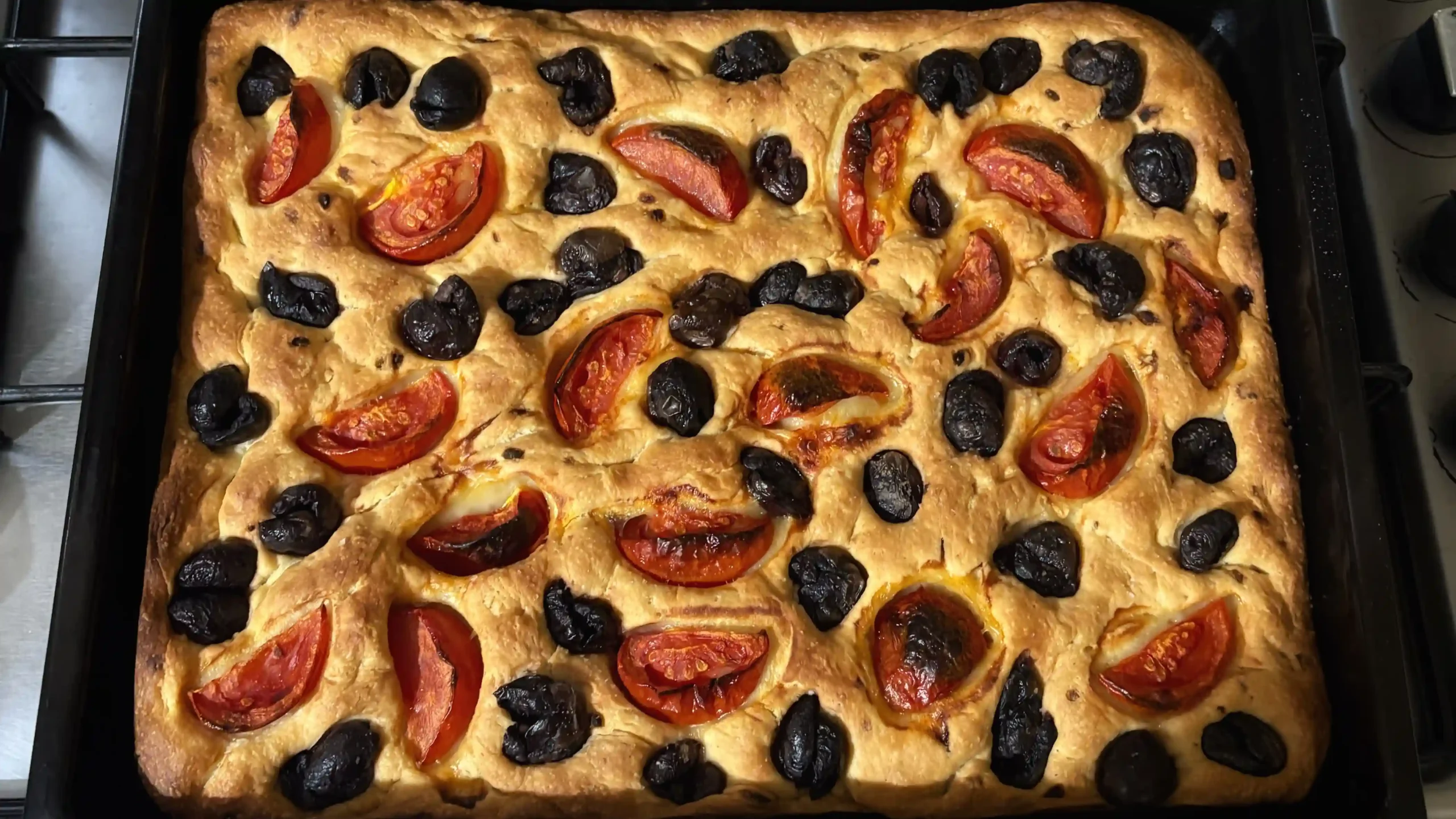
Homemade Focaccia Recipe
Ingredients
Method
- Combine the warm water, sugar, and yeast in a bowl. Stir gently and let the mixture sit for about 10 minutes.
- Once bubbles and foam appear on the surface, the yeast is active and ready to use.
- Place the sifted flour in a large mixing bowl. Add the salt and finely chopped onion.
- Pour in the olive oil and gradually add the yeast mixture while stirring.
- When the dough begins to come together, transfer it to a lightly floured surface and knead for about 8-10 minutes.
- The dough should become smooth, elastic, and slightly soft.
- Transfer the dough to a lightly oiled bowl. Cover with plastic wrap or a clean kitchen towel.
- Let it rise at room temperature for approximately 1½ hours, until doubled in size.
- Drizzle 2 tablespoons of olive oil over the risen dough. Fold the dough toward the center from all sides about 8 times.
- Cover again and let it rest for another hour. This step helps develop the airy texture that focaccia is known for.
- Generously grease a baking tray with olive oil. Transfer the dough to the tray and gently stretch it using your fingertips.
- Press your fingers into the surface to create the classic focaccia dimples. Drizzle additional olive oil over the top.
- Arrange the sliced tomatoes and pitted olives over the dough.
- If desired, add fresh rosemary and finish with a sprinkle of flaky sea salt.
- Bake in a preheated 220°C (425°F) oven for approximately 22-30 minutes.
- The focaccia is ready when the edges turn golden brown. Avoid waiting for the top to become dark brown, as this can dry out the bread.
- Allow the focaccia to cool on a wire rack for about 15 minutes before slicing.
- For extra flavor and softness, brush the surface lightly with olive oil while the bread is still warm.
Notes
- A generous amount of olive oil helps create focaccia’s characteristic crust.
- High-hydration dough is essential for achieving an airy crumb structure.
Cafer Can Yeşilyurt